Understanding cannabis plant anatomy is one of the most important parts of becoming a better grower. Whether you are growing from seed, running cannabis clones, or simply trying to understand how the plant develops, knowing what each part of the plant does can help improve yields, plant health, and overall quality. It also helps growers spot problems early, including pests, nutrient issues, and diseases like HLVD that can quietly spread through infected mother plants and clones.
Cannabis plants may look simple at first glance, but every section of the plant plays a specific role in growth, reproduction, and resin production. From the roots all the way to the trichomes, each part works together to keep the plant alive and thriving.
Roots
The roots are the foundation of the cannabis plant. They absorb water, oxygen, and nutrients from the growing medium and transport them throughout the plant. Healthy roots are usually bright white and spread aggressively through soil, coco, or hydroponic systems.
A weak root system often leads to slow growth, nutrient deficiencies, drooping leaves, and lower yields. Root health is especially important during the early vegetative stage because strong roots support rapid top growth later in the plant’s life cycle.
Cannabis roots also store energy and help stabilize the plant as it grows larger.
Stem
The stem acts as the main support structure for the cannabis plant. It carries water and nutrients from the roots upward while transporting sugars and energy throughout the plant.
Healthy stems become thick and strong over time, especially when plants receive proper airflow and lighting. Indoor growers often use oscillating fans to strengthen stems naturally by simulating outdoor wind conditions.
The stem also determines how much weight the plant can support during flowering when buds become dense and heavy.
Branches
Branches extend from the main stem and create the structure that supports leaves and flowers. Cannabis plants naturally form side branches as they mature, especially during the vegetative stage.
Growers often train branches using techniques like topping, low-stress training, or trellising to create a more even canopy and increase light exposure. More healthy branches usually mean more flowering sites and larger harvests.
Some strains naturally branch heavily, while others grow with a more vertical structure.
Nodes
Nodes are the points where branches and leaves grow from the stem. They are one of the most important areas on the plant because this is where new growth develops.
During the flowering stage, nodes become major bud sites. Growers also use node spacing to evaluate plant structure. Tight node spacing often produces compact plants with dense flowers, while wider spacing is more common in taller sativa varieties.
Pre-flowers also appear at the nodes, helping growers identify whether a plant is male or female before full flowering begins.
Fan Leaves
Fan leaves are the large, recognizable leaves most people associate with cannabis plants. These leaves are responsible for photosynthesis, which converts light into usable energy for growth.
Healthy fan leaves are critical because they power the plant throughout its life cycle. Leaves also help growers diagnose issues. Yellowing, spotting, curling, or discoloration can signal nutrient problems, overwatering, pests, or environmental stress.
Indica strains often produce broader leaves, while sativas usually have thinner, narrower leaves.
Flowers or Buds
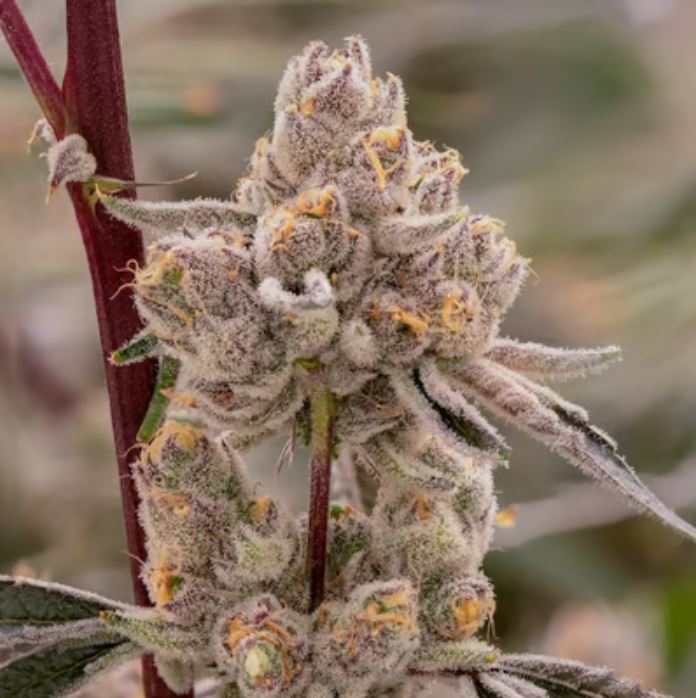
The flowers, often called buds, are the most valuable part of the cannabis plant for most growers and consumers. Female cannabis plants produce resin-rich flowers filled with cannabinoids and terpenes.
Buds develop during the flowering stage and become denser over time as the plant matures. Environmental conditions, lighting, genetics, and feeding all influence flower quality.
High-quality flowers are typically sticky, aromatic, and heavily coated in trichomes.
Pistils
Pistils are the thin hair-like structures that grow from cannabis flowers. Early in flowering, they are usually white or light-colored. As the plant matures, they darken into orange, red, or brown shades.
Pistils help capture pollen during reproduction, but they also serve as visual indicators of flower maturity. Growers often monitor pistil color changes when estimating harvest timing.
Trichomes
Trichomes are tiny crystal-like resin glands that coat cannabis flowers and nearby leaves. These glands produce cannabinoids like THC and CBD along with the terpenes responsible for aroma and flavor.
Trichomes are one of the most important parts of the cannabis plant because they contain the compounds most growers are seeking. Under magnification, trichomes appear clear, cloudy, or amber as the plant matures.
Most growers harvest when trichomes reach peak ripeness based on the desired effects and potency.
Final Thoughts
Learning cannabis plant anatomy gives growers a much better understanding of how the plant functions from root to harvest. Every part of the plant serves a purpose, from absorbing nutrients to producing resin-covered flowers.
The better you understand plant structure, the easier it becomes to identify healthy growth, improve yields, and catch problems before they become serious. Whether growing indoors or outdoors, strong knowledge of cannabis anatomy is a major advantage for both new and experienced cultivators.